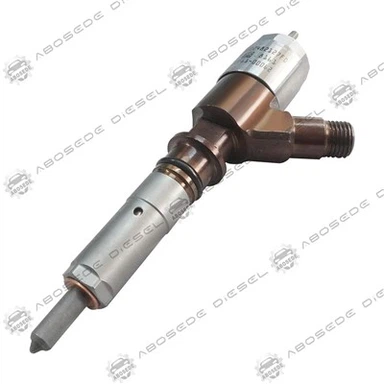
Elektroniskt kontrollerat dieselinjektionssystem
Apr 02, 2025
För att förbättra dieselmotorns driftsprestanda och minska bränsleförbrukningshastigheten och även för att tillgodose behoven hos strikta dieselmotorutsläppsstandarder, sedan början av 1980 -talet har en mängd elektroniskt kontrollerade dieselinjektionssystem kommit ut en efter den andra .}
Tre steg av elektroniskt kontrollerat bränsleinsprutningssystem
Elektroniskt kontrollerat bränsleinsprutningssystem är det viktigaste i det elektroniska styrsystemet för dieselmotor . I utvecklingsprocessen finns det tre stadier av positionskontroll, tidskontroll och trycktidskontroll elektroniskt kontrollerat bränsleinsprutningssystem .}
1. Positionstyrningstyp Elektroniskt kontrollbränsleinsprutningssystem
Den första generationen av elektroniskt bränsleinsprutningssystem behåller helt den grundläggande strukturen för det traditionella bränslesystemet . genom att lägga till ett styrsystem som består av sensorer, ställdon och mikroprocessorer, det styr positionen för racket eller glidhylsan för bränslepumpen och därmed kontrollerar bränsleinsprutningsmängden för bränsleinsprutningssystemet och förbättring av bränslesystemet {{{{{{en bränsle) för bränsleinjektion)
2. Tidsstyrningstyp Electric Control Fuel Injection System
Den andra generationen av elektroniskt kontrollerat bränsleinsprutningssystem styr huvudsakligen öppnings- och stängningstiden för höghastighetsmagnetventilen, styr mängden bränsletillförsel genom öppningstiden för solenoidventilen, och kan direkt styra bränsleinjektionsprocessen för dieselmotorn . Enligt de olika enheterna som genererar högtryck, det kan vara delat in i distributionspumpen (se DIELESEL (se Desele, NOGE ERBUNESE SYLLE) Typ (se dieselmotorpumpmunstycke) och enstaka pumptyp (se dieselmotor enkel pump) Elektronisk kontroll Dieselinjektion .
3. Tryck-tidskontroll av elektrisk kontrollbränsleinsprutningssystem
The third generation of electronically controlled fuel injection system is represented by the high-pressure common rail fuel injection system, which innovates the main basic components of the traditional fuel system. Its characteristics are that the generation process of fuel injection pressure has nothing to do with the fuel injection process, and the high-speed powerful solenoid valve is used to control the fuel injection start point and injection amount independently, flexibly and accurately.
Fördelar med Common Rail Fuel Injection System
Dieseloljan sugs ut från oljetanken med lågtrycksoljepumpen och levereras till högtrycksoljepumpen efter att ha filtrerats, en magnetventil är anordnad i lågtrycksoljepumpen för att styra bränsleoljan för att nå en högtrycksoljepumpskammare, och bränsleoljan kommer in i den rörformiga tryck accumulatorn Fuel-järnvägen . en press-press-press-press från Time Time Of the Common Time till Time Times Time Time Time Time to the Fuel to the Time to the Time to the Time to the Time to the Time to the Time to the Time to the Fuel to the Fuel To Time to the Fuel To Time to the Fuel To Time to the Fuel t Fuel { transmits the signal to the ECU to control the fuel pressure in the common rail to reach the desired value by adjusting the flow.The injection pressure varies from 200 to 1800 bar according to the operating conditions of the engine, and then it is injected into the cylinder by computer control. The common rail not only maintains the fuel pressure, but also eliminates the pressure fluctuation.
Fuel injection is a complex combination of mechanical, hydraulic and electronic systems. In order to adapt to the working environment of the engine under various working conditions, the fuel must be filtered and pressurized before combustion, and injected into each cylinder at a certain injection rate at an accurate time. The engine computer controls the exhaust gas recirculation, supercharging, and exhaust aftertreatment systems for optimum engine performance och avgasutsläpp .
Ny generation gemensam järnvägsmotor
Diesel Common Rail System har utvecklats i tre generationer, och det har stark teknisk potential .
The first-generation common-rail high-pressure pump was always kept at the highest pressure, resulting in a waste of energy and high fuel temperatures. The second generation can change the output pressure according to the engine demand, and has the function of pre-injection and post-injection. Pre-injection reduces engine noise: a small amount of fuel is injected into the cylinder for compression ignition one millionth of a second before the main injection, pre-heating the combustion chamber.The preheated cylinder makes the compression ignition after main injection easier, and the pressure and temperature in the cylinder no longer increase suddenly, which is conducive to reducing combustion noise. In the expansion process, post-injection produces secondary combustion, which increases the temperature in the cylinder by 200 to 250 degrees Celsius and minskar kolvätena i avgaserna .
Because of its strong technical potential, today manufacturers have set their sights on the third generation of the common rail system, the piezo-electric (piezo) common rail system, which replaces the solenoid valve with a piezoelectric actuator, thus achieving more precise injection control. Without the oil return pipe, the structure is simpler. The pressure is elastically adjusted from 200 to 2000 bar . Minsta injektionsbelopp kan kontrolleras vid 0 . 5mm3, och rök- och NOx -utsläppet reduceras.